


MONA delivers robotic process automation the way it should be done in 2026: classic UI bots where they genuinely fit, API-first integrations where they don't, and AI agents where rules alone can't cope. In-house engineers, 10+ years of building business software, and honest advice on which of the three you actually need.
What Robotic Process Automation Is (and When It's Still the Right Tool)
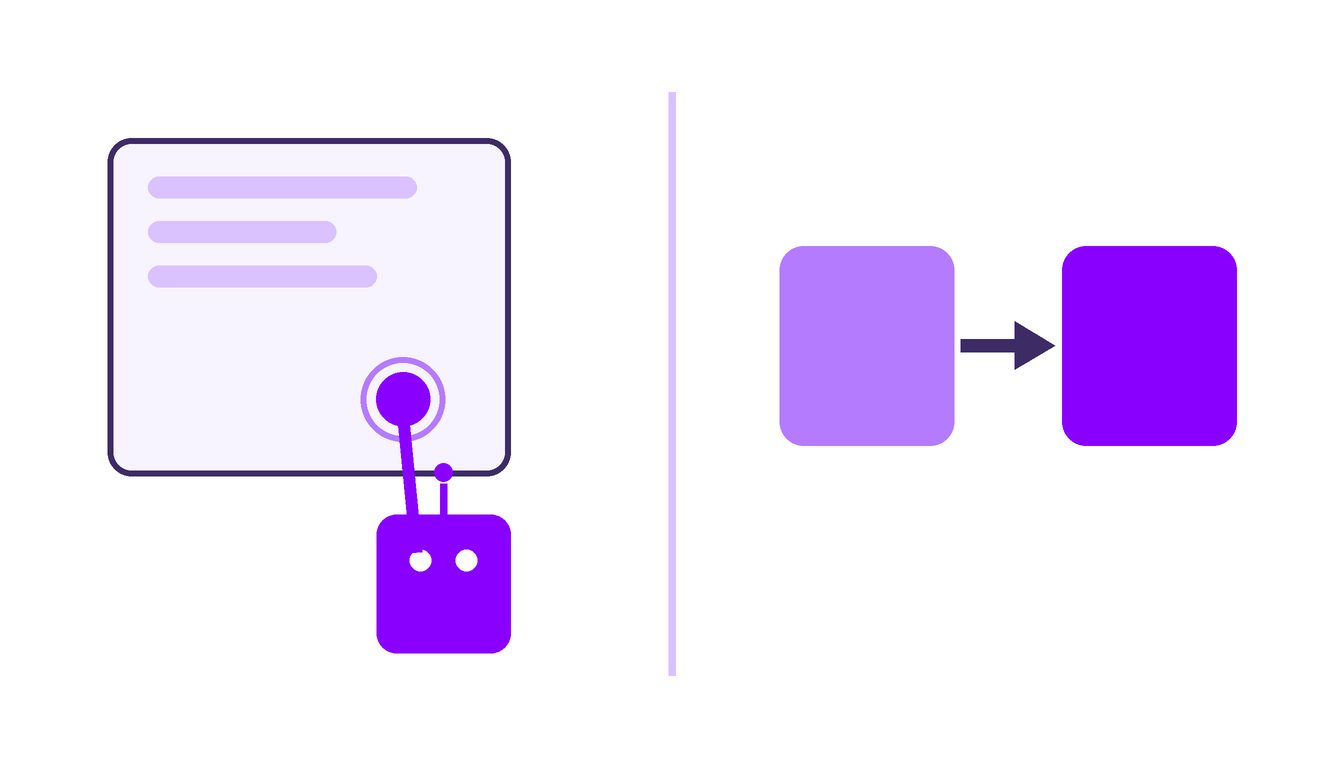
Robotic process automation (RPA) is software that performs repetitive digital tasks the way a human would: opening applications, reading screens, clicking buttons, copying values between fields, and submitting forms. An RPA bot follows a scripted sequence across the user interfaces of your existing systems, which is exactly why it became popular. You don't need to modify the underlying software, ask a vendor for API access, or rebuild anything. The bot simply does what your staff does, faster and without typos.
That strength is also RPA's structural weakness. Because the bot depends on the screen, anything that changes the screen can break it: a software update, a moved button, a renamed field, an unexpected popup.
RPA is still the right choice when:
- The system you're automating has no usable API: legacy desktop software, old ERPs, government or banking portals, third-party tools you can't touch
- The process is stable, rules-based, and high-volume: the same steps, in the same order, thousands of times
- You need results without changing the underlying systems, for compliance, vendor, or budget reasons
RPA is the wrong choice when the systems involved expose APIs (a direct integration is faster and far more reliable), when the process requires judgment or handles unstructured input, or when the interface changes frequently. In those cases you want workflow automation or an AI agent, and a vendor who only sells RPA will never tell you that.
MONA builds all three. That's the difference this page is about.
The Problem With Most RPA Services: You're Sold a Hammer
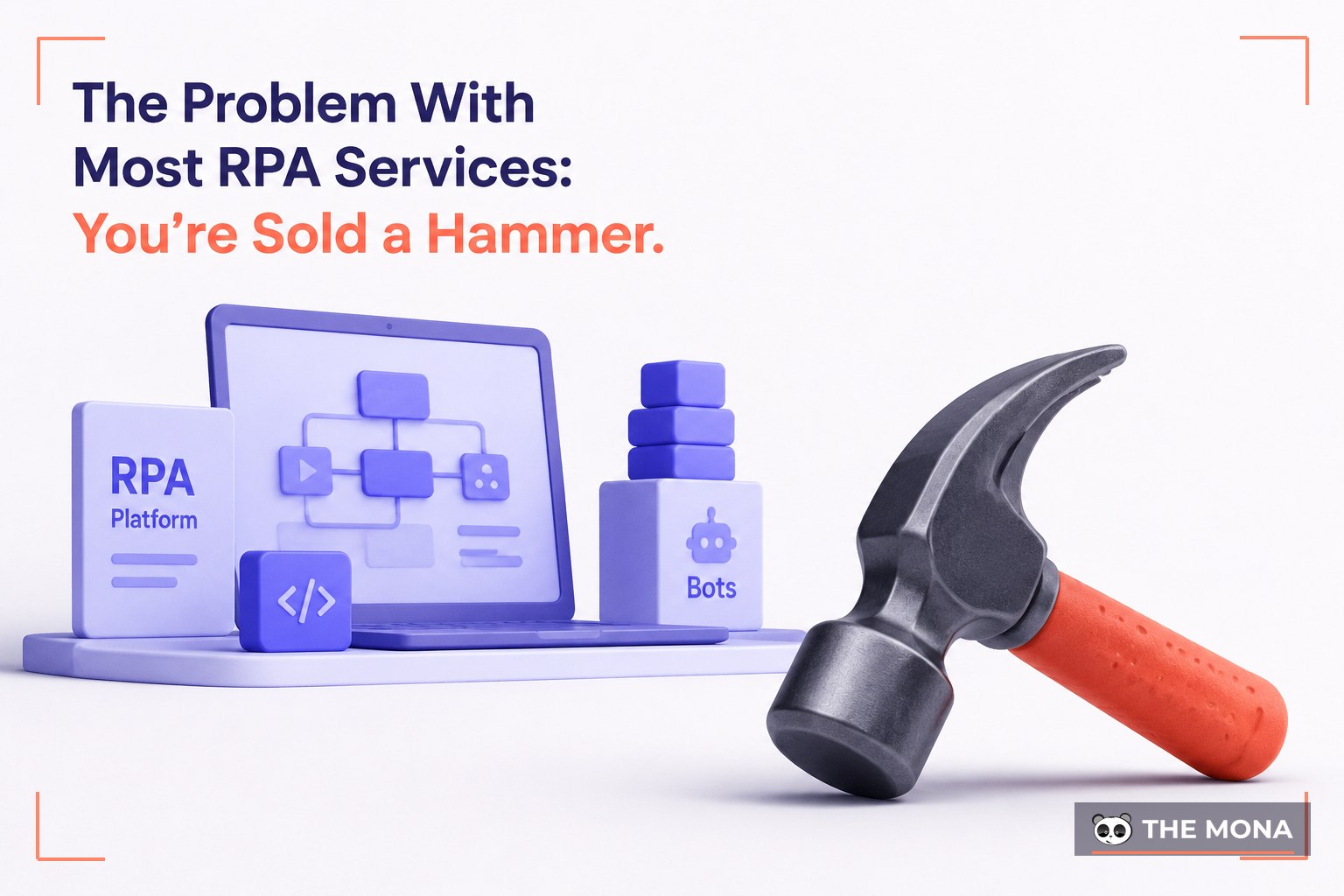
The RPA industry has a well-known pattern: a platform license is sold, a consultancy scripts a few dozen bots against your screens, the pilot demo looks great. Then reality arrives. Interfaces change. Bots fail silently. A "bot maintenance team" becomes a permanent line item.
The root cause usually isn't bad scripting. It's that screen-driven automation was applied to processes that should never have been automated through the screen. If two systems both have APIs, driving a mouse cursor between them is the most fragile possible bridge.
Our position as an RPA services provider is simple:
- UI-level RPA is a legitimate tool for systems that offer no other way in. We build it carefully, with monitoring, retries, and graceful failure.
- API-first automation beats RPA wherever an API exists. As a software company, our engineers integrate directly with databases, REST/GraphQL APIs, and webhooks: connections that don't care what the screen looks like.
- AI closes the gap rules can't. Where classic RPA stalls (reading varied documents, interpreting free-text emails, handling exceptions), we add AI components or replace the bot with an AI agent entirely.
Most projects we deliver are hybrids: an RPA bot logging into the one legacy portal that has no API, feeding an API-based pipeline, with an AI step handling the unstructured parts. You get the reach of RPA without inheriting its fragility across your whole stack.
Robotic Process Automation Services We Deliver
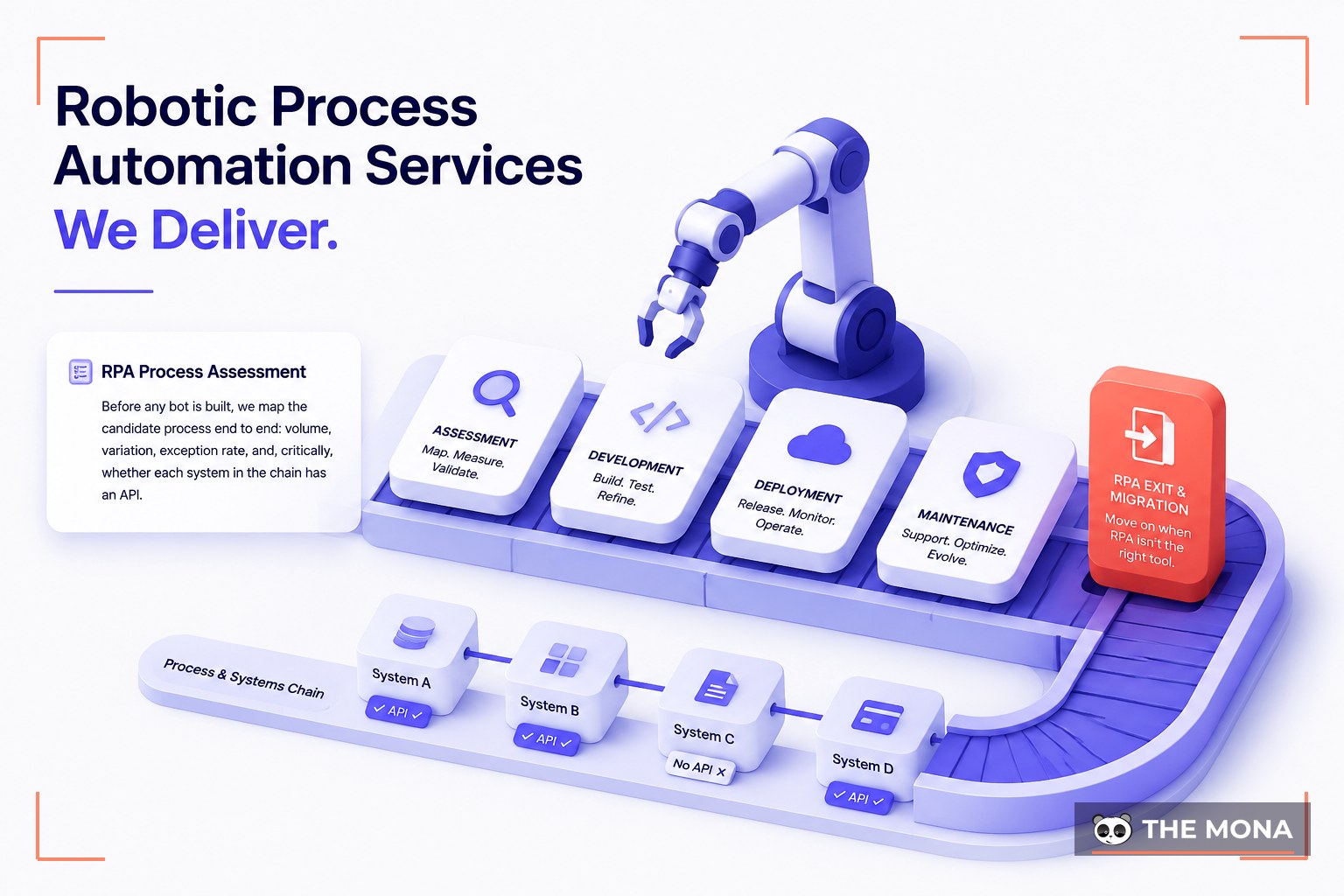
Our robotic process automation services cover the full lifecycle (assessment, development, deployment, and long-term maintenance) plus the service most RPA vendors won't offer: migrating you off RPA where it's the wrong tool.
RPA Process Assessment
Before any bot is built, we map the candidate process end to end: volume, variation, exception rate, and, critically, whether each system in the chain has an API. The output is a build recommendation per process: classic RPA, direct integration, AI agent, or "don't automate this yet."
RPA Bot Development
Custom attended and unattended bots for data entry, form filling, report extraction, reconciliation, order processing, and legacy-system operation. Every bot ships with logging, failure alerts, and documented recovery steps, because a bot that fails silently is worse than no bot at all.
Legacy RPA Rescue & Stabilization
Already have bots that break every other week? We audit existing RPA estates (regardless of who built them or on what platform), stabilize the bots worth keeping, and identify the ones that should be rebuilt as API integrations or retired.
RPA-to-AI Migration
The upgrade path most RPA deployments eventually need: replacing brittle screen scripts with API-first pipelines and AI agents that read documents, interpret intent, and handle exceptions instead of crashing on them. Your automation stops being a maintenance burden and starts absorbing variation.
System Integration Behind the Bots
Because MONA has built CRM, ERP, sales, and HR systems for over a decade, we don't stop at the screen. Where access exists, our engineers build the direct connectors (APIs, database syncs, webhooks) that make automation permanent rather than fragile. For organization-wide programs, see our business process automation services.
Monitoring, Maintenance & Support
Automations degrade as businesses change. We monitor bot runs, catch failures before your team notices, and adapt the automation as your processes and software evolve, under a support agreement, not an hourly scramble.
RPA vs AI Agents vs Workflow Automation: How to Choose

These three terms get used interchangeably by vendors, which is how companies end up with the wrong tool. Here's the honest breakdown we walk clients through:
| Classic RPA | Workflow Automation | AI Agents | |
|---|---|---|---|
| How it works | Bot mimics human actions on the screen (clicks, keystrokes) | Systems connected directly via APIs, triggers, and logic flows | AI reads, decides, and acts, with human checkpoints where risk demands |
| Best for | Legacy systems with no API; stable, repetitive screen work | Connecting modern tools (CRM, ERP, e-commerce, spreadsheets) reliably | Unstructured input, judgment calls, exceptions, multi-step reasoning |
| Handles change? | Poorly: UI changes break bots | Well: APIs are versioned contracts | Well: models interpret rather than match pixels |
| Handles unstructured data? | No | Only with rules you predefine | Yes: documents, emails, free text |
| Typical failure mode | Silent breakage after a software update | Edge case not covered by the flow logic | Wrong judgment, mitigated with human-in-the-loop review |
The practical answer for most mid-sized businesses is a combination: workflow automation as the backbone, RPA only for the API-less holdouts, AI agents for the messy, judgment-heavy edges.
If your processes mostly live in modern, connectable tools, start with our workflow automation services. If your bottleneck is work that requires reading and deciding (triaging emails, extracting data from varied documents, qualifying leads), look at AI agent development. And if you're not sure, that's precisely what our assessment is for.
RPA Consulting: Decide Before You Build
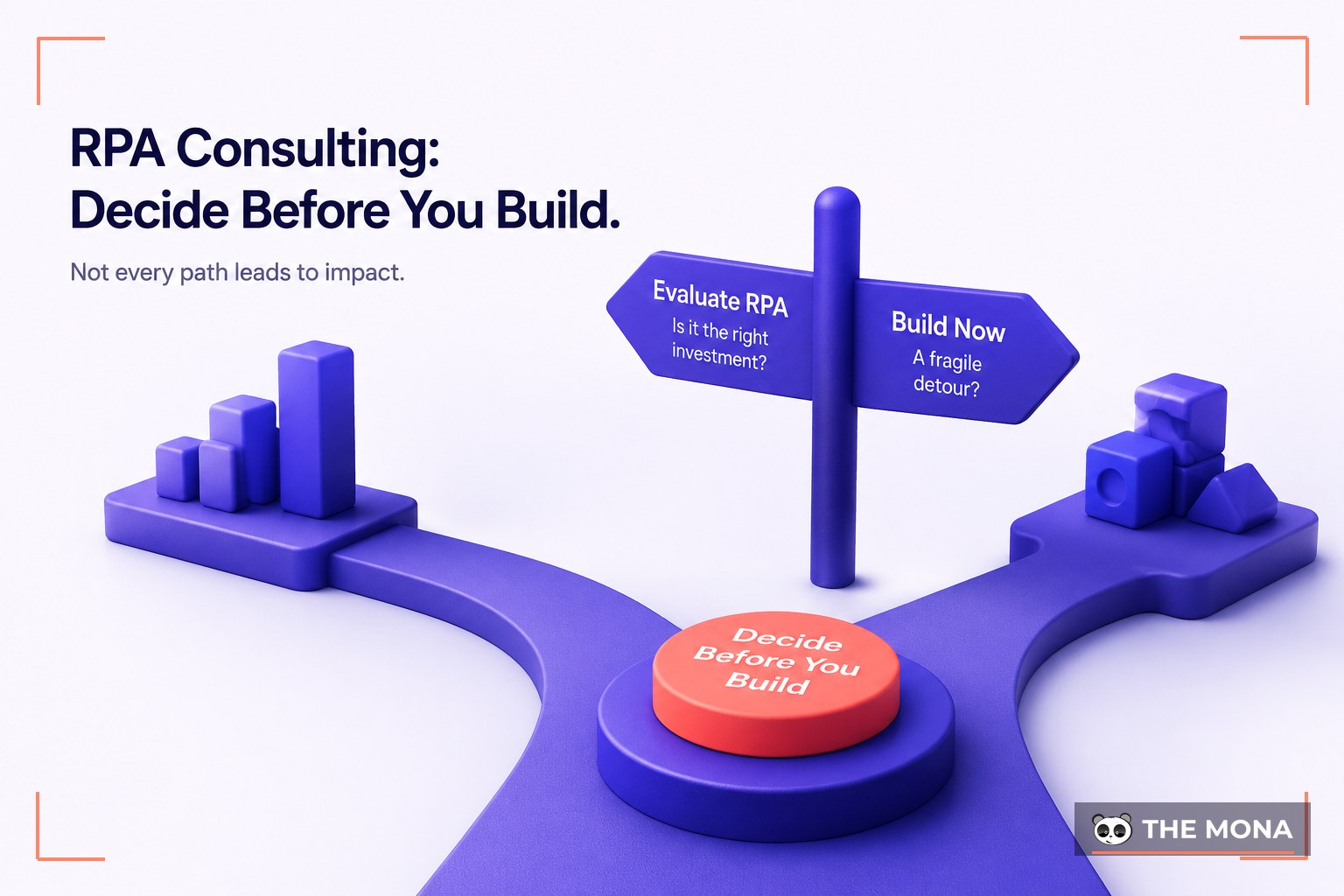
Not every engagement should start with development. Our RPA consulting service exists for companies at a decision point:
- Evaluating RPA for the first time: is it the right investment, or a fragile detour?
- Choosing between RPA platforms and custom automation, without a license reseller's bias in the room
- Sitting on an underperforming RPA estate, needing an independent read on what to keep, fix, or replace
- Planning an automation roadmap, needing candidates ranked by ROI, risk, and technical fit
The engagement is structured and fixed-scope: we shadow the actual workflows, document each process, check API availability across your systems, and deliver a prioritized roadmap specifying the right technique per process, not the one technique we happen to sell. You can execute it with us or with your own team. MONA is an engineering company, not a platform reseller, so no license quota shapes the advice.
For automation strategy beyond RPA specifically, our full-service AI automation agency team covers the wider landscape: chatbots, document pipelines, marketing operations, and custom AI systems.
Why MONA as Your RPA Development Company
Choosing an RPA development company is really a question about what happens after the demo. Here's what you're getting with MONA:
- Engineers, not just bot scripters. Our in-house engineers span software development, web, and infrastructure. When automation needs a custom API, a database, a connector, or a hosted service, we build it in-house instead of declaring it out of scope.
- A decade of business systems behind the bots. Across 10+ years we've delivered CRM, ERP, sales, and HR software spanning 14,000+ projects. We know what's on the other side of the screen your bot is clicking on, because we've built those screens.
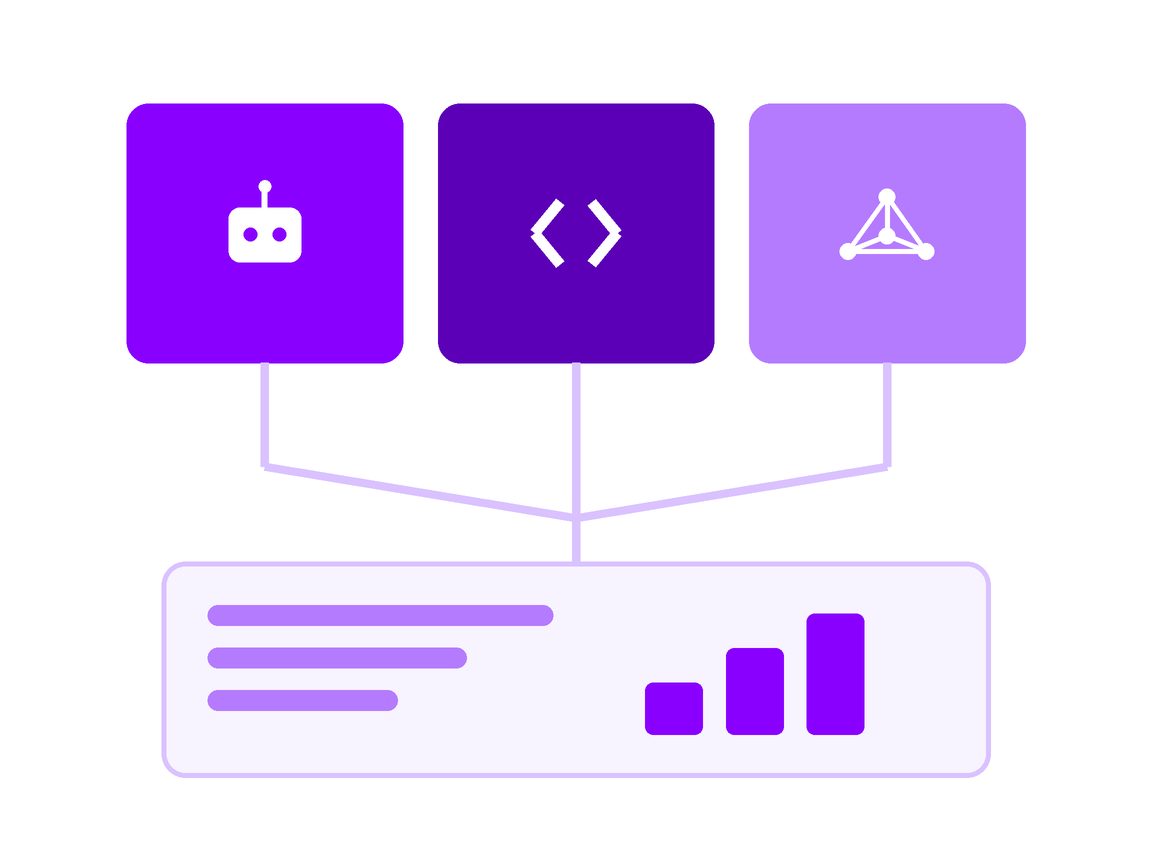
- All three disciplines under one roof. Classic RPA, API-first workflow automation, and AI agents. You get the right tool per process and one accountable vendor, not three contracts to reconcile.
- Vietnam engineering economics. Automation succeeds through iteration: pilot, tune, expand. When engineering hours cost a fraction of US or Western European rates, you can afford to iterate properly. Our GMT+7 time zone overlaps European mornings and US evenings.
- You own everything. Bots, code, workflows, documentation, credentials. No proprietary platform ransom, no black boxes.
How an RPA Project Runs at MONA
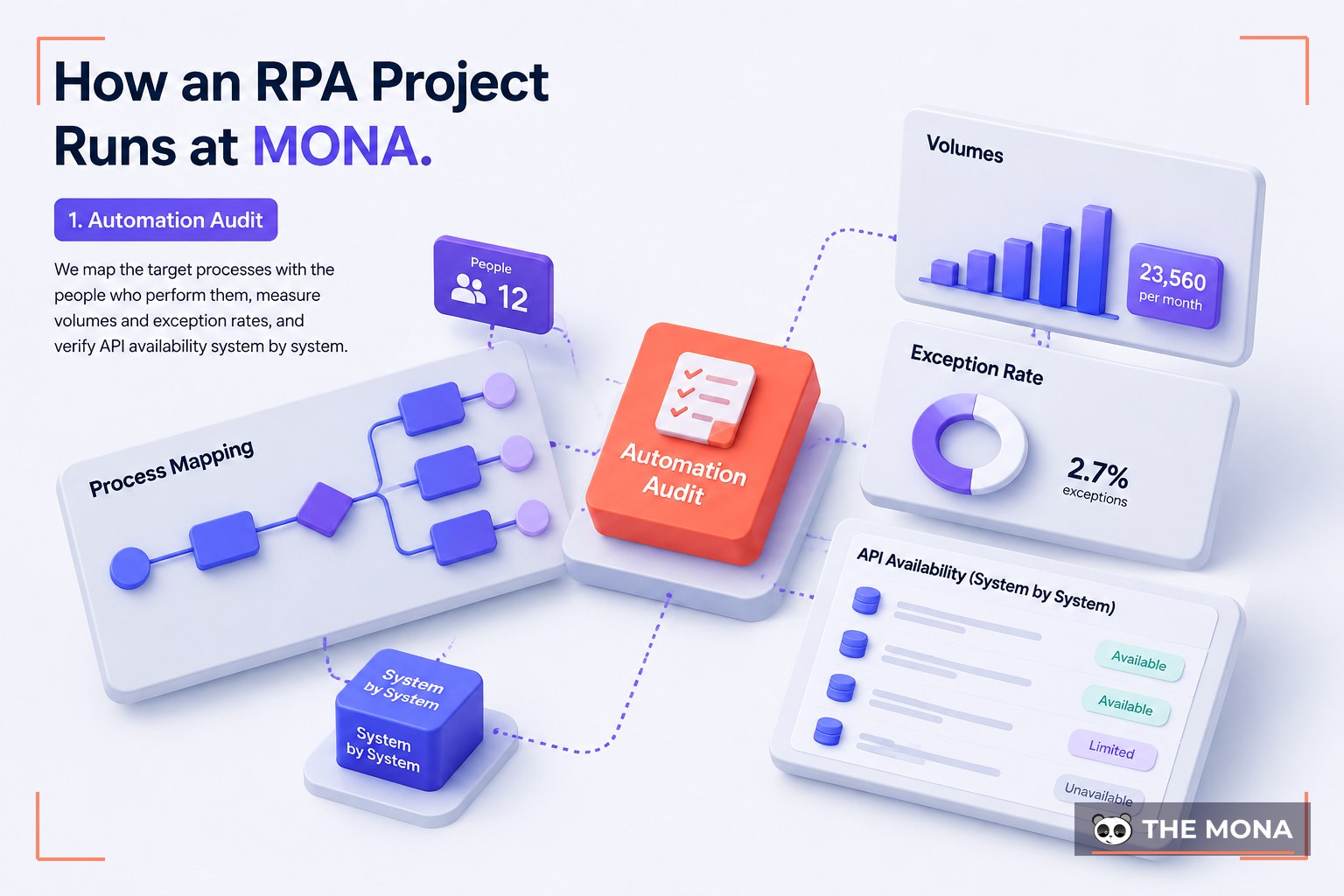
- Automation Audit. We map the target processes with the people who perform them, measure volumes and exception rates, and verify API availability system by system.
- Technique Selection & Design. Each process gets an explicit recommendation (RPA, integration, AI agent, or hybrid) with the trigger, logic, checkpoints, and success metric defined before development starts.
- Build in Staging. Bots and pipelines are developed against realistic test data and stress-tested on edge cases: timeouts, popups, malformed inputs, partial failures.
- Pilot with Guardrails. Launch on a limited slice (one team, one document type, one region) with human review where outputs carry risk.
- Rollout, Handover & Monitoring. Full deployment with documentation and training, then ongoing monitoring so failures surface to us before they surface to your customers.
Ready to Fix or Build Your Automation?
Tell us which processes are breaking, or which ones you'd automate if you trusted the tool. We'll assess honestly and recommend the right technique, not just the one we sell.