


MONA is an LMS development company for businesses that need their own product, workflow, and economics. Our custom LMS development work comes from operating MONA EduCenter, UniMaster, SkillHub, and a course-selling eLearning platform ourselves. You receive the source code, control the roadmap, and avoid a lifetime fee on every learner you add.
Why Companies Outgrow Off-the-Shelf LMS SaaS
Off-the-shelf LMS products are sensible when your training operation fits their model. The friction begins when the model becomes your constraint: every active learner increases the bill, a required workflow sits behind an enterprise tier, and the integration your business depends on is either unavailable or reduced to a generic connector.
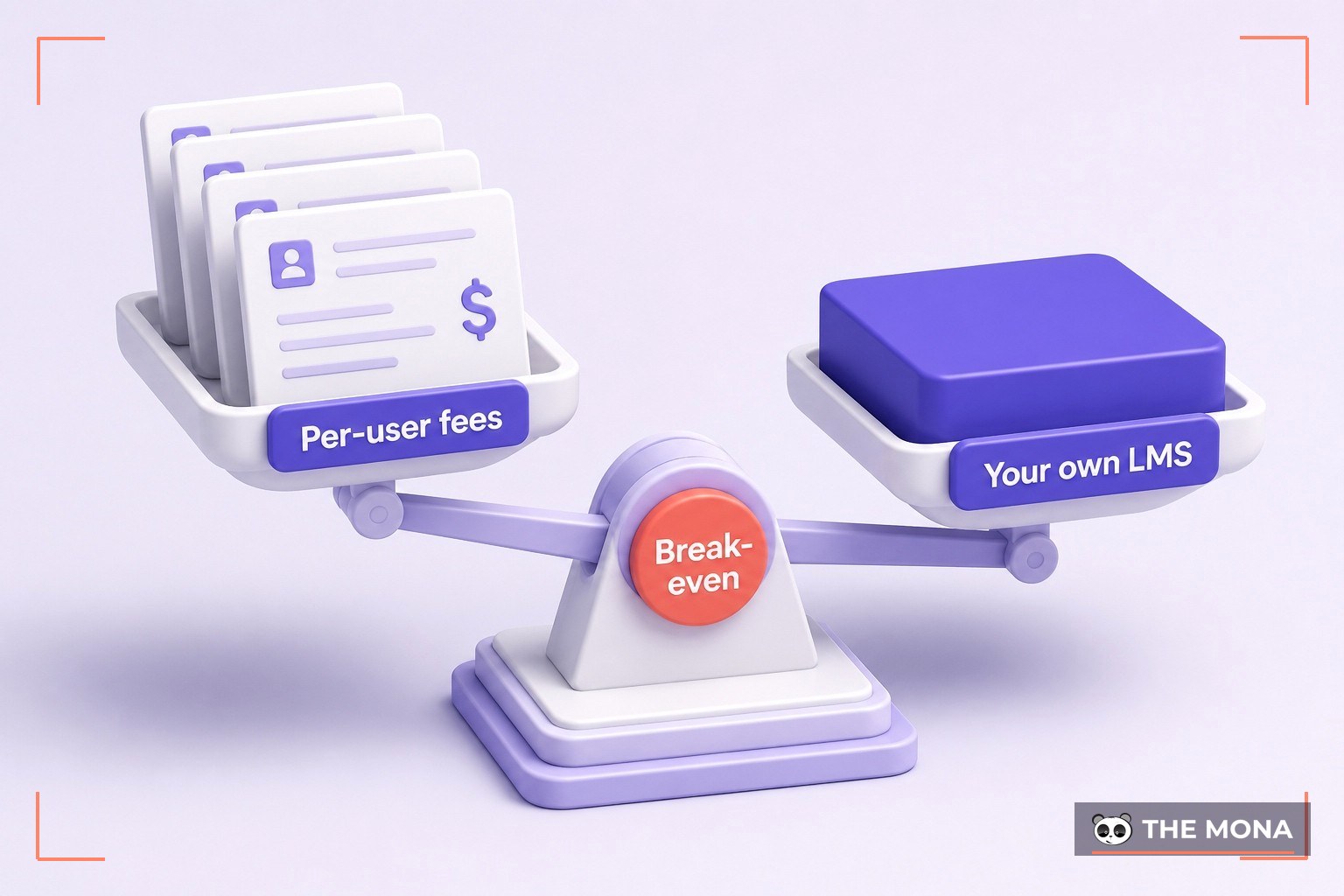
At that point, adding another subscription workaround does not fix the underlying problem. Your academy may need its own catalog, instructor settlement, certificates, and local payment flow. Your enterprise may need training rules driven by HR data and identity policy. Your edtech company may need a product investors can value as intellectual property rather than an account on somebody else's platform.
MONA builds the alternative: an LMS shaped around your operating model, deployed on infrastructure you control, and handed over with its source code. There is no MONA fee for adding the next learner. You still pay transparent operating costs such as cloud, video delivery, and third-party services, but you decide how the platform grows.
Custom LMS Development Built on Platforms We Operate
We did not enter custom LMS development with a blank repository and a list of fashionable features. MONA has built and operated MONA EduCenter for training-center management, UniMaster, SkillHub for internal corporate learning, and an eLearning platform for selling courses. Each product forced us to deal with the unglamorous work after a lesson page ships: enrollment state, content revisions, administrator exceptions, learner support, reporting, and ongoing releases.
That operating experience changes the questions we ask. We want to know who publishes a course, who approves it, what happens when an employee changes department, how a learner resumes a package after an interrupted session, and which record finance or compliance will treat as authoritative. Those decisions become the data model and permission system, not notes left for a later sprint.
Your LMS is custom-built, not a reskinned copy of a MONA product. The advantage is that we arrive with tested product judgment and reusable engineering knowledge while your workflows, brand, data, and roadmap remain your own.
LMS Development Services for Three Different Business Models
The words "learning platform" hide very different businesses. We shape our LMS development services around the operating model before selecting modules.
- Training centers and academies: course catalogs, cohorts, instructor operations, assessments, certificates, commerce, promotions, and learner support belong in one system. This is often the right move after per-user pricing and fixed templates start limiting margins or the student experience.
- Corporate learning teams: training assignment, organizational structure, role-based curricula, compliance evidence, SSO, and HRM or HRIS synchronization matter more than a public storefront. SkillHub gives MONA direct product experience in this internal-training context.
- Edtech companies: the LMS is the product. Multi-tenant design, product analytics, configurable business rules, APIs, and a clean ownership trail matter because the platform must support sales, fundraising, and continued scale.
A single platform can cross these models, but the boundaries should be deliberate. If you are also building a subscription product around the learning engine, our SaaS development experience covers tenancy, plans, billing state, and product operations beyond the classroom.
SCORM-Compliant LMS Development, xAPI, and LTI Done Deliberately
Enterprise buyers should require standards support when course portability, completion evidence, or third-party learning tools matter. A vendor saying "we support SCORM" is not enough; the implementation has to preserve state through real learner behavior and report it consistently.
- SCORM 1.2 and SCORM 2004: we implement package import and launch, runtime communication, completion and success state, scores, session time, suspend data, and resume behavior. We test with representative packages rather than treating a successful upload as proof of compliance.
- xAPI (Tin Can): we use xAPI when learning activity extends beyond a conventional course player and the business needs statements collected in a Learning Record Store. The vocabulary and reporting questions are agreed before events are emitted, so the record is useful rather than merely extensive.
- LTI 1.3: we implement LTI when the LMS must launch and exchange context with external learning tools. Authentication, role mapping, deep linking, and grade return are designed as one trust flow, not separate plugin tasks.
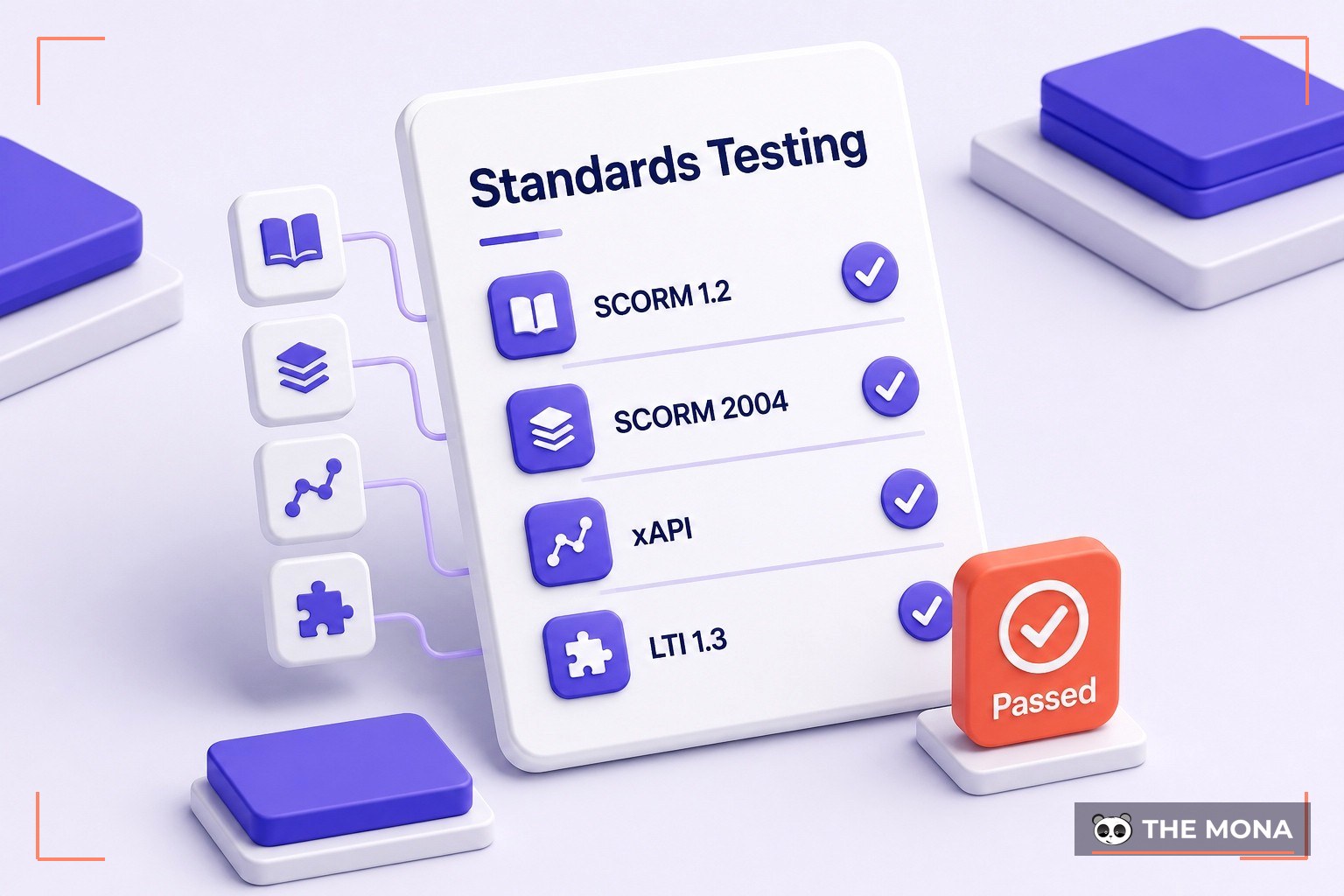
Standards are part of acceptance testing. MONA checks the package or tool combinations you actually plan to run, records the expected outcomes, and keeps regression cases for future releases.
An LMS Architecture for Video, Concurrent Learners, and Mobile Use
A course player can look finished while its delivery architecture is still fragile. We design the platform around where learners are, how they connect, what content they consume, and what a peak session looks like.
- Video delivery and CDN: video is prepared for adaptive delivery and served near the learner through an appropriate content delivery network. Access rules, signed delivery, captions, and playback telemetry are considered with the publishing workflow.
- Practical content protection: tokenized access, expiring delivery URLs, session controls, watermarking options, and DRM-capable services can raise the cost of unauthorized sharing. We do not promise impossible leak prevention; we match protection to the commercial value and threat model of the course.
- Concurrent learner load: authentication, enrollment checks, progress writes, assessment submissions, notifications, and reporting jobs are separated and tested against the agreed concurrency model. Caching and queues are applied where they remove real bottlenecks, not as architecture decoration.
- Mobile-first learning: the learner journey is designed for smaller screens, variable networks, interrupted sessions, and touch interaction from the start. Responsive pages are the baseline; native applications or controlled offline access are scoped when the product case justifies them.
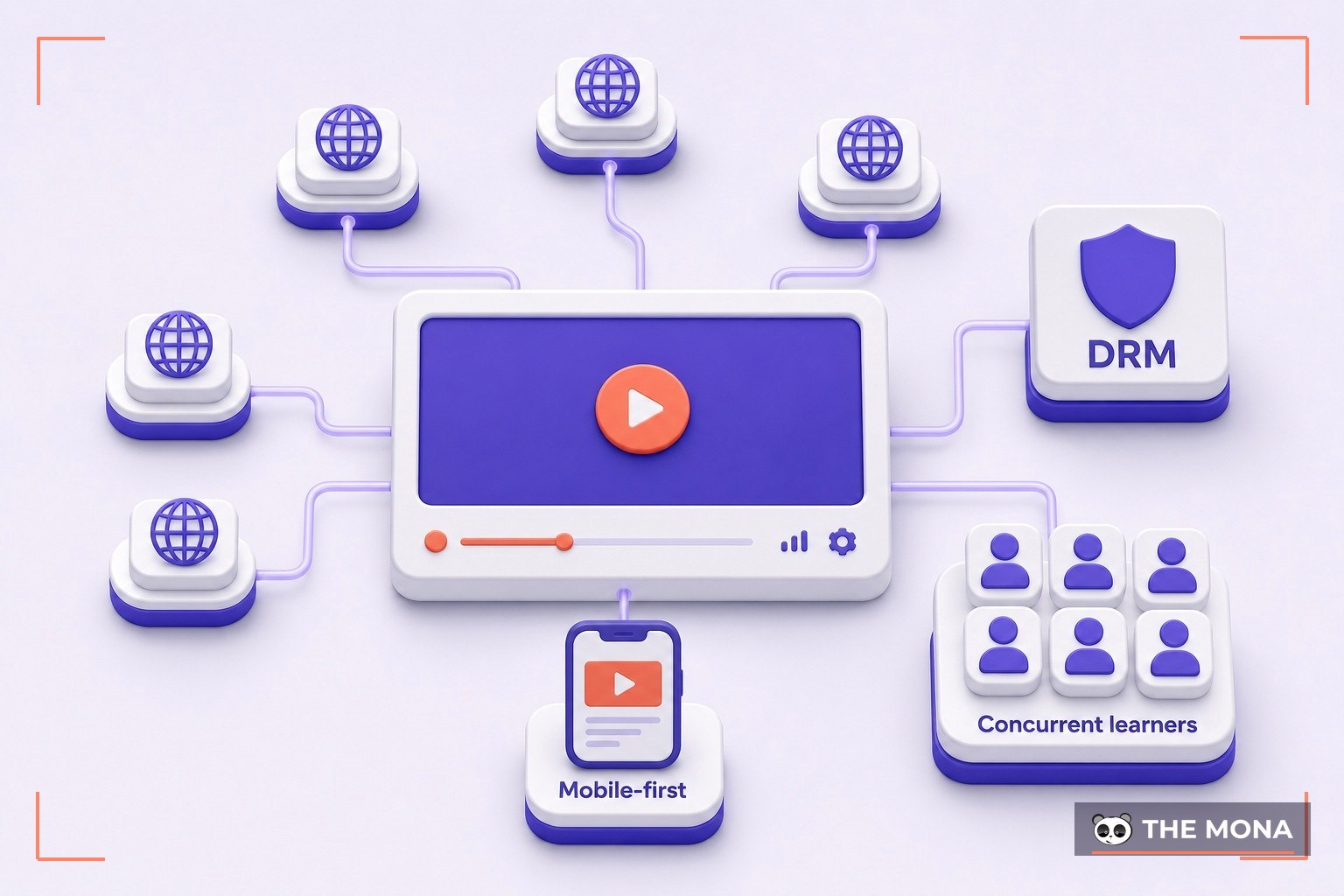
Monitoring, backups, recovery procedures, and deployment discipline are part of the same architecture. Launch is the first day the system must explain its own failures clearly enough for a team to act.
LMS Integrations That Respect the Source of Truth
Integration work fails when both systems are allowed to own the same fact. Before connecting an API, MONA defines which platform creates a learner, which one controls access, how changes propagate, what can be retried, and who sees a failed synchronization.
- HRM and HRIS: employee profiles, departments, roles, managers, status changes, and training assignments can flow from the workforce system without turning the LMS into a second HR database.
- CRM: leads, customers, purchases, cohorts, and learning milestones can support sales or customer-success workflows with explicit field ownership and consent rules.
- SSO: SAML or OAuth-based sign-in can connect the LMS to an enterprise identity provider, with role mapping, account lifecycle rules, and audit records designed alongside authentication.
- Payments: Stripe, PayPal, and local gateways can support the markets you sell into. We treat payment state, refunds, access granting, and webhook recovery as one transaction flow.
- Live classes: Zoom or Google Meet can be tied to scheduling, enrollment, attendance, reminders, recordings, and permissions instead of appearing as a bare meeting link.
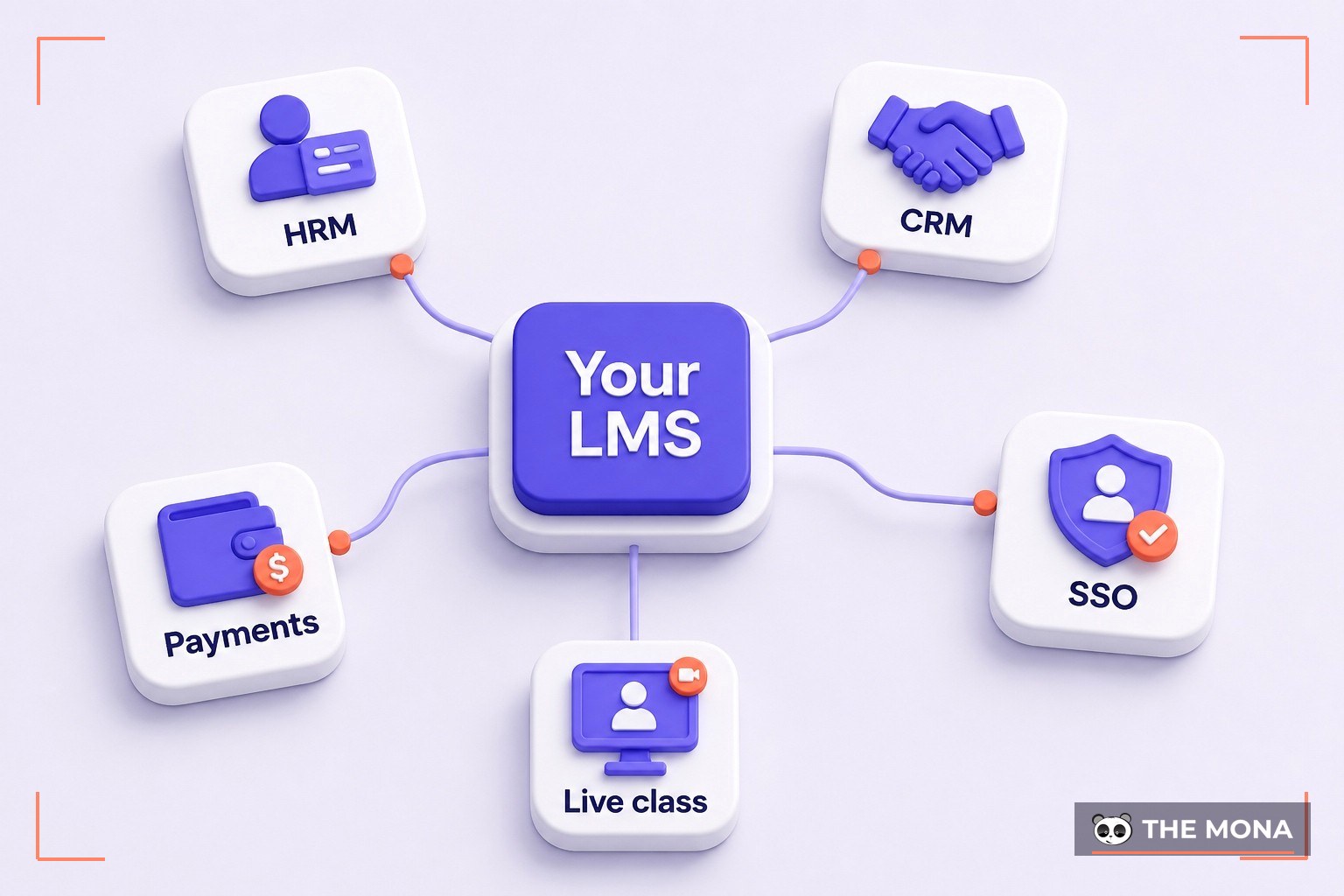
Where an integration must become a product surface, we design a documented API and webhook layer so future systems do not require edits scattered through the LMS.
Custom LMS vs SaaS: Model the 3–5-Year Cost, Not the First Invoice
A SaaS trial makes the first invoice easy to see and the later constraints hard to price. A custom build reverses that pattern: the investment is visible up front, while the marginal cost of adding learners is driven mainly by infrastructure and usage rather than a vendor's seat schedule. The honest comparison puts both on the same 3–5-year horizon.
| Cost or constraint | Off-the-shelf LMS SaaS | Custom LMS built by MONA |
|---|---|---|
| Initial spend | Lower entry cost and faster configuration when workflows already fit | Discovery, product design, engineering, migration, testing, and launch are funded up front |
| Learner growth | Recurring fees commonly rise with active users, seats, tiers, or usage | No MONA per-user license; infrastructure and third-party usage remain visible |
| Custom workflows | Configuration is limited to the vendor's product model; exceptions become workarounds | Core workflows and permissions are designed around the operating model |
| Integrations | Available connectors, API limits, and enterprise tiers define the boundary | The integration layer is built against agreed systems and ownership rules |
| Ownership and exit | The vendor owns the platform; exports and product changes follow its terms | You own the source code, data, documentation, and infrastructure access |
| Ongoing work | Subscription, add-ons, internal administration, and workaround maintenance | Hosting, video delivery, support, security updates, and roadmap development |
The break-even point is where cumulative subscription, tier, integration, and workaround costs exceed the custom platform's build and operating cost. We calculate it with your learner forecast and required features. If SaaS remains the better economic choice, we will tell you.
Vietnam engineering economics changes the scope you can responsibly fund. The budget that often buys a thin first release from a Western agency can fund a fuller product in Vietnam: the standards work, integration handling, administration, and operational foundation that are expensive to retrofit after learners arrive.
What You Own After We Build a Custom LMS
A custom platform should reduce vendor dependence, not move it to a new vendor. Your company receives the source code, product assets, data, infrastructure credentials, technical documentation, and deployment knowledge defined in the engagement.
- No MONA per-user license: learner growth does not create a new software royalty to us.
- Mainstream engineering choices: we favor technologies a future internal team or another qualified vendor can maintain.
- Documented operations: environments, deployments, backups, monitoring, integrations, and recovery procedures are handed over rather than kept as agency folklore.
- A roadmap you control: business priority, not a SaaS vendor's global release queue, determines what is built next.
Some clients retain MONA as a dedicated development team; others transition the codebase to their own organization. The handover standard is the same in either case.
How MONA Runs a Custom LMS Development Project
- Discovery and economic boundary. We map learner, instructor, administrator, finance, and compliance journeys; inspect existing content and systems; define the first release; and compare its ownership cost with the current SaaS path.
- Architecture and acceptance rules. The team settles data ownership, roles, standards, integrations, video delivery, security, concurrency assumptions, migration, and measurable acceptance cases before those choices become expensive code.
- Product build. Working LMS flows move through a staging environment in reviewable increments. Administrators and learners test the actual workflow while change is still cheap.
- SCORM and integration testing. Representative SCORM packages, xAPI statements or LTI tools are tested where applicable. SSO, HR, CRM, payment, and live-class connections are exercised through success, retry, and failure paths.
- Migration and launch rehearsal. Data is mapped and rehearsed, operating procedures are documented, and the release path is run before the production cutover.
- Launch and operation. MONA monitors real usage, resolves launch findings, and hands the evidence into the next roadmap cycle. The product is supported as an operating system for learning, not closed as a finished website.
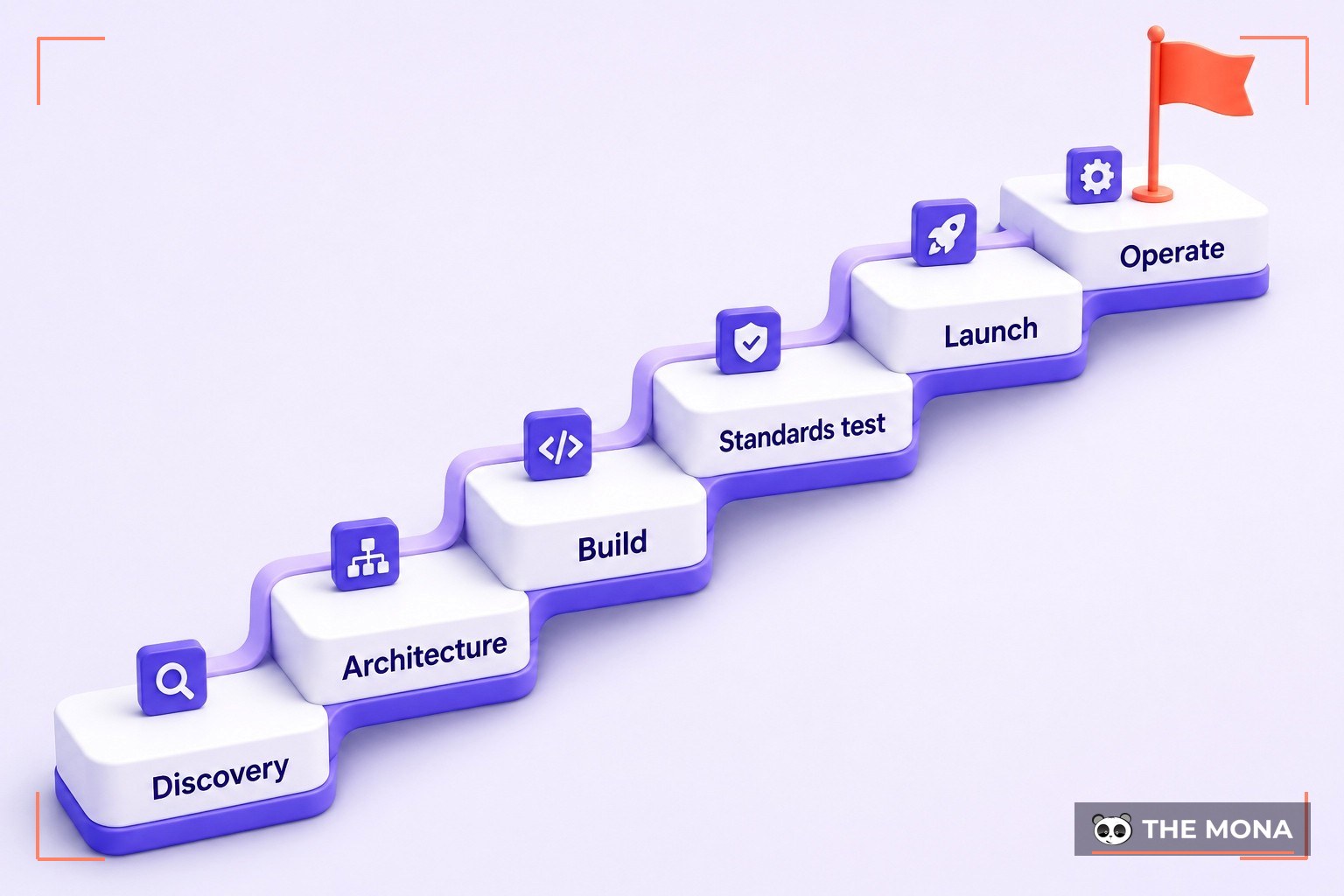
Every stage has a decision owner, reviewable output, and written record. If you need to extend your internal capability instead of outsourcing the whole build, MONA can also help you hire developers in Vietnam or establish an offshore development center.
The Real eLearning Case Behind Our LMS Development Services
MONA's clearest case is not a borrowed client logo. It is the product family we have had to operate ourselves: MONA EduCenter for training-center management, UniMaster, SkillHub for corporate training, and a platform for businesses selling courses online.
Building across those contexts taught us that the lesson player is only one part of the product. A usable LMS also has to survive content changes, enrollment exceptions, administrator workload, different learner states, reporting demands, and the releases that follow launch. A choice that looks tidy in a prototype can create daily manual work for the people running the academy or learning team.
That is why our discovery starts with operations and why our test plan covers state, permissions, standards, and failure recovery. We reuse the judgment earned from live products, then build your platform around your rules. We do not relabel an existing MONA product and call it custom.
Why Hire MONA as Your LMS Development Company
- Product experience, not a first LMS experiment. Our own eLearning products give the team a working reference for the operational decisions hidden behind course screens.
- Broader software depth. An LMS touches commerce, identity, HR data, CRM workflows, media delivery, analytics, and cloud operations. MONA brings those disciplines together as a software development company, so the integration boundaries have accountable owners.
- Evidence you can verify. MONA was founded in 2016, has delivered 14,000+ projects, and records 85% client retention. Those are the business facts we stand behind; we do not pad a proposal with invented LMS user counts.
- Vietnam engineering economics. International clients can put more of the same budget into the complete product: administration, standards, integrations, testing, and operational readiness, not just visible learner screens.
- Ownership without hostage terms. The code, documentation, infrastructure access, and data belong to you, with a practical path to continued MONA support or an internal handover.
A custom build is not automatically the right answer. The first useful outcome of our architecture session may be a build plan, a narrower integration, or a recommendation to stay on SaaS until the economics change. That candor is part of the service.
Build the LMS Your Business Can Own
Bring us your current LMS bill, learner model, required integrations, and the workflow that standard platforms cannot support. We will map the custom architecture, the first release, and the build-vs-buy break-even case.